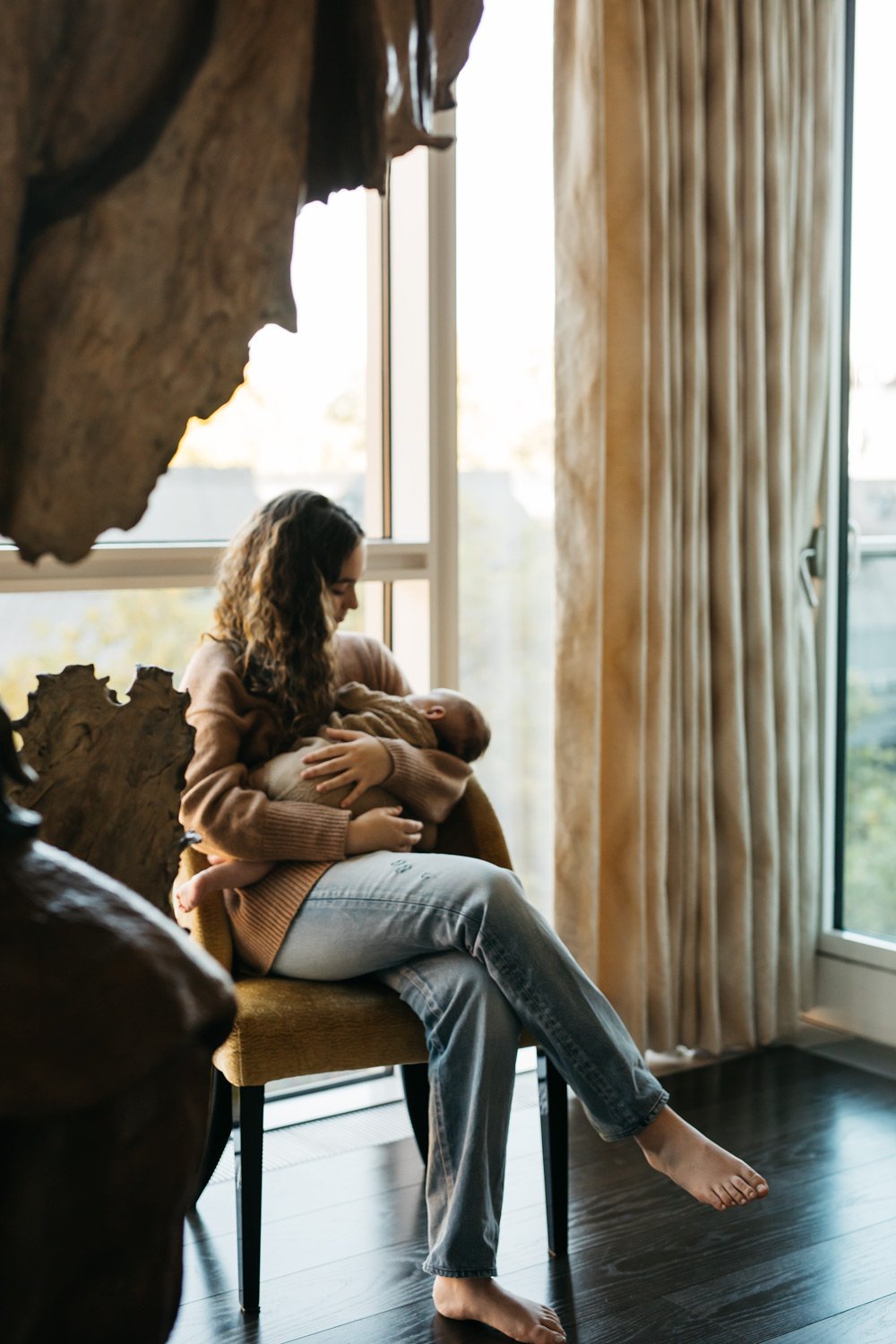
When Should Newborn Photos Be Taken? (And What Actually Matters Most)
For many parents, one of the first questions that comes up when thinking about newborn photography is simple:
When is the right time to do it?
It’s often presented as a narrow window. The first ten days. The first two weeks. A specific moment that, if missed, feels like an opportunity lost.
But after more than fourteen years photographing newborns in their homes across London, I’ve come to see things a little differently.
The timing matters, but not in the way people expect.
The early days
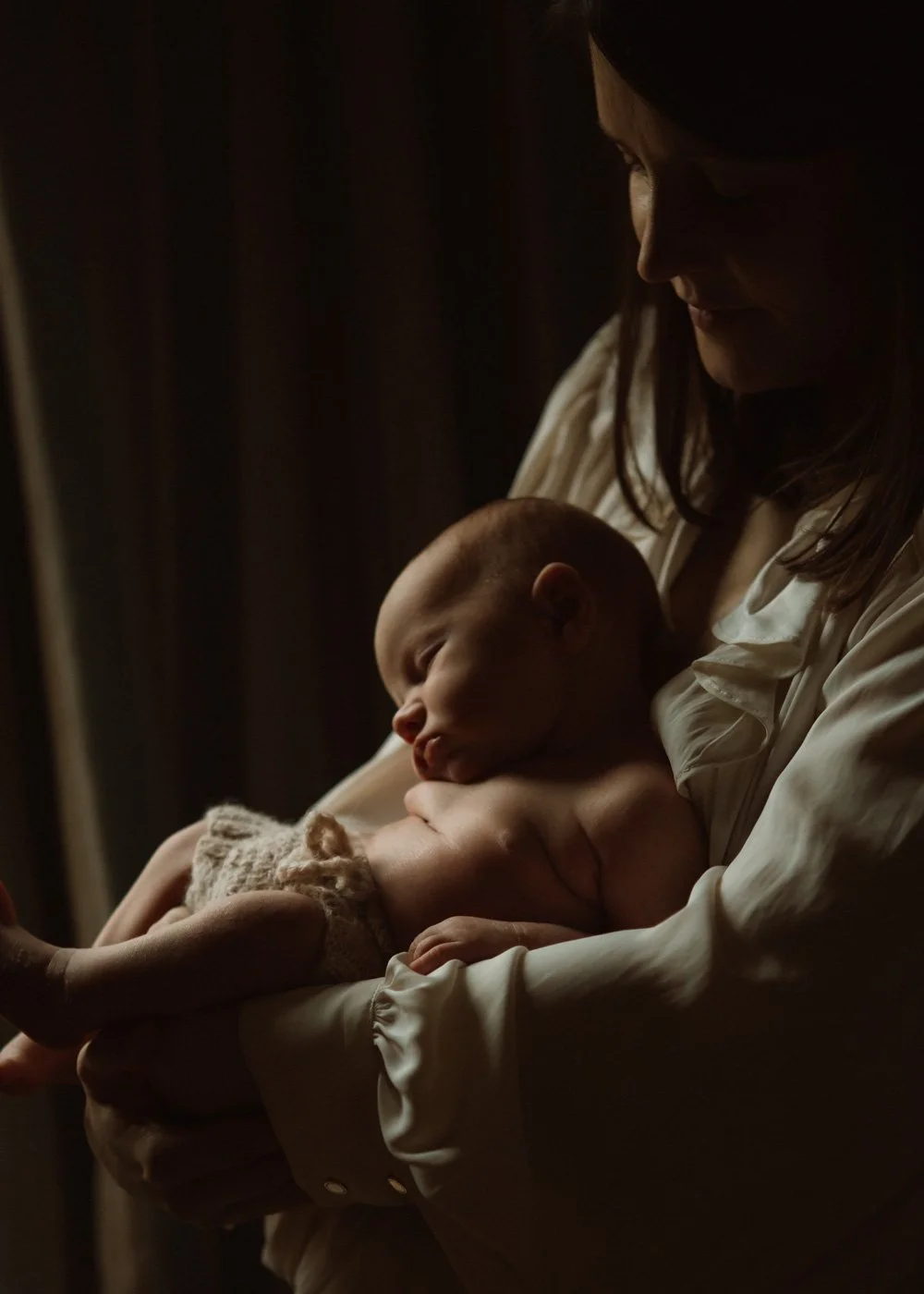
There is something undeniably special about the very early weeks.
Babies are still small and curled, often sleepy, and naturally drawn into those soft, instinctive positions that feel so familiar from the womb. The pace of life slows in a way that feels almost suspended. Everything is new, quiet, and a little surreal.
This is why many sessions take place within the first two to five weeks.
Not because it is the only time worth capturing, but because it holds a particular kind of stillness.

Different approaches to newborn photography
You may have come across different advice around timing, and often that comes down to the style of photography itself.
For many years, I worked in a more traditional newborn style, where babies are gently posed while they sleep. In that setting, the first one to two weeks tends to be the easiest time to photograph, as babies are sleepier and naturally curl into those positions.
That experience still informs how I work today. It gave me a deep understanding of babies, how they move, how they settle, and how to read what feels right in the moment.
But over time, my approach shifted.
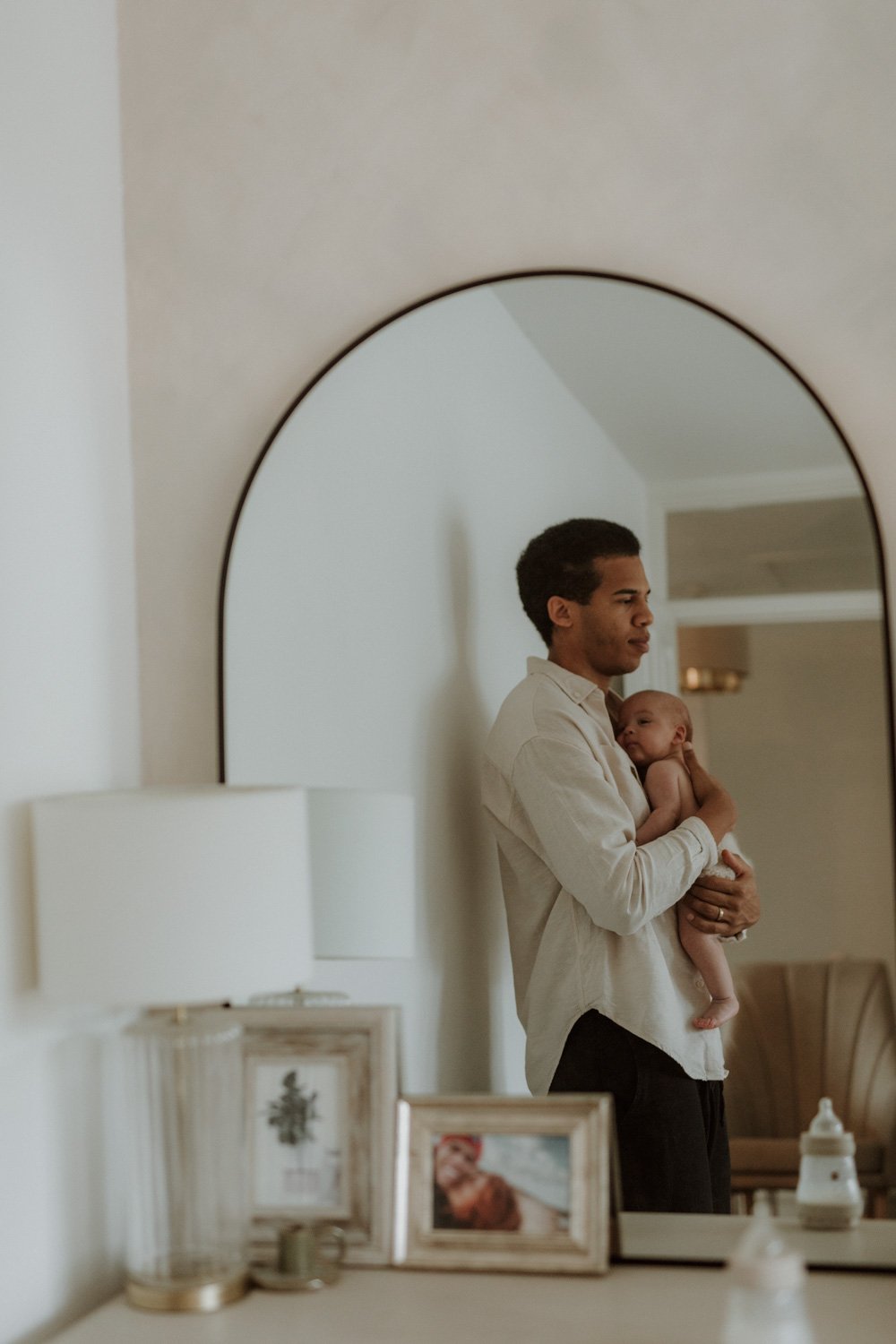
I became more interested in what was already there. The way a parent holds their baby without thinking. The small, in-between moments that don’t need to be arranged or directed.
And that kind of work isn’t limited to a narrow window.
What people worry about
One of the most common things I hear from parents is:
“I think we’ve left it too late.”
Often, this comes from a sense that newborn photography follows strict rules. That there is a right way, a right time, and a right version of how things should look.
But real life rarely unfolds like that.
Babies arrive early. Or late. Recovery takes time. Families find their rhythm in their own way.
And sometimes, those slightly later days carry something just as meaningful.
Beyond the “newborn window”
At three, four, even eight weeks, something begins to shift.
Babies stretch out a little more. Their eyes open for longer. There is a growing awareness, a softness in how they look at the world, and at you.
Parents, too, often feel more grounded. A little more themselves again.
The connection is still new, but it has settled just enough to be felt in a different way.
These moments are just as worth documenting.
What actually matters
Over time, I’ve realised that the most important part of a newborn session isn’t the exact timing.
It’s the feeling.
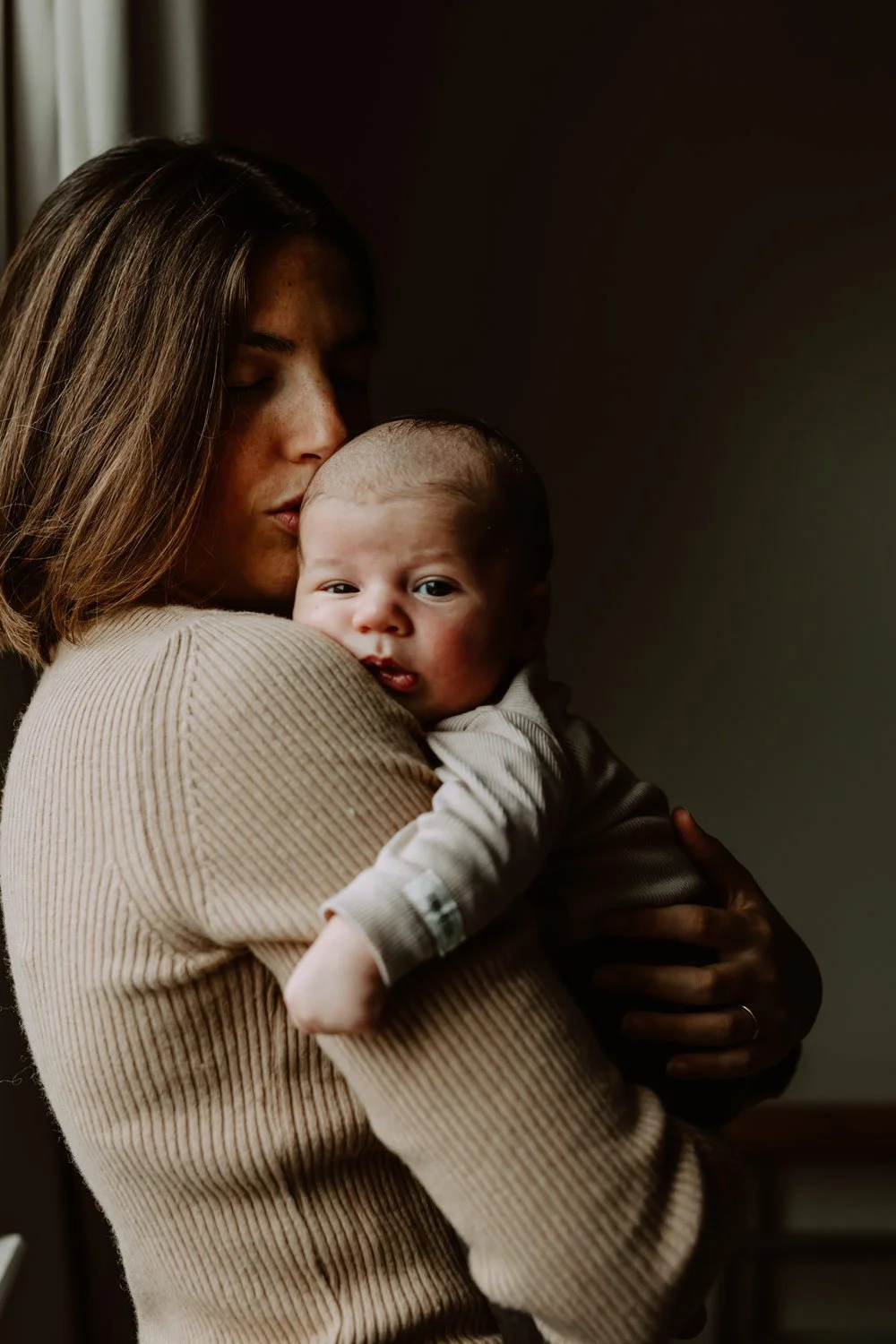
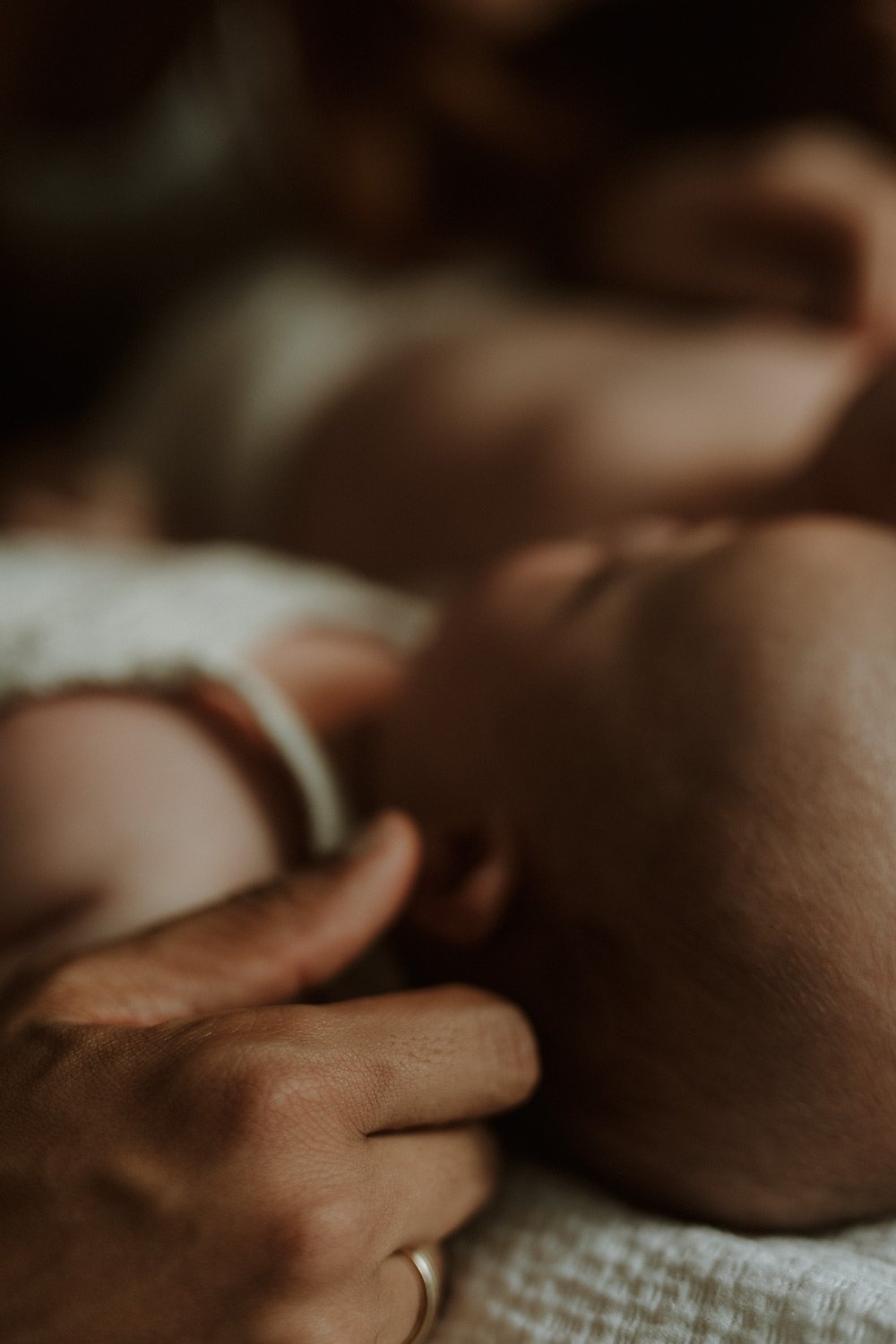
The way you hold your baby without thinking.
The small adjustments you make instinctively.
The quiet communication between you, even in the early days.
Those are the moments that stay.
They don’t depend on whether your baby is ten days old or six weeks old. They come from connection, not timing.
A gentle, intuitive approach
I will always offer gentle direction where it’s needed, but in a way that feels natural and never forced. The focus is on helping you feel comfortable and present, so the connection between you can come through honestly.
Every family is different. Some people need more guidance, others very little. I pay attention to that, adjusting as we go so you never feel unsure of what to do, but also never feel like you’re being posed or controlled.
I’ve always been someone who notices the small things, and that naturally shapes the way I work with people.
A gentle guide, not a rule
If you are planning ahead, it can be helpful to book your session while you are still pregnant, with the intention of photographing those early weeks.
But if your baby is already here, and time has moved on a little, you haven’t missed anything.
There is no perfect moment to capture. Only the one you are in.
In the end
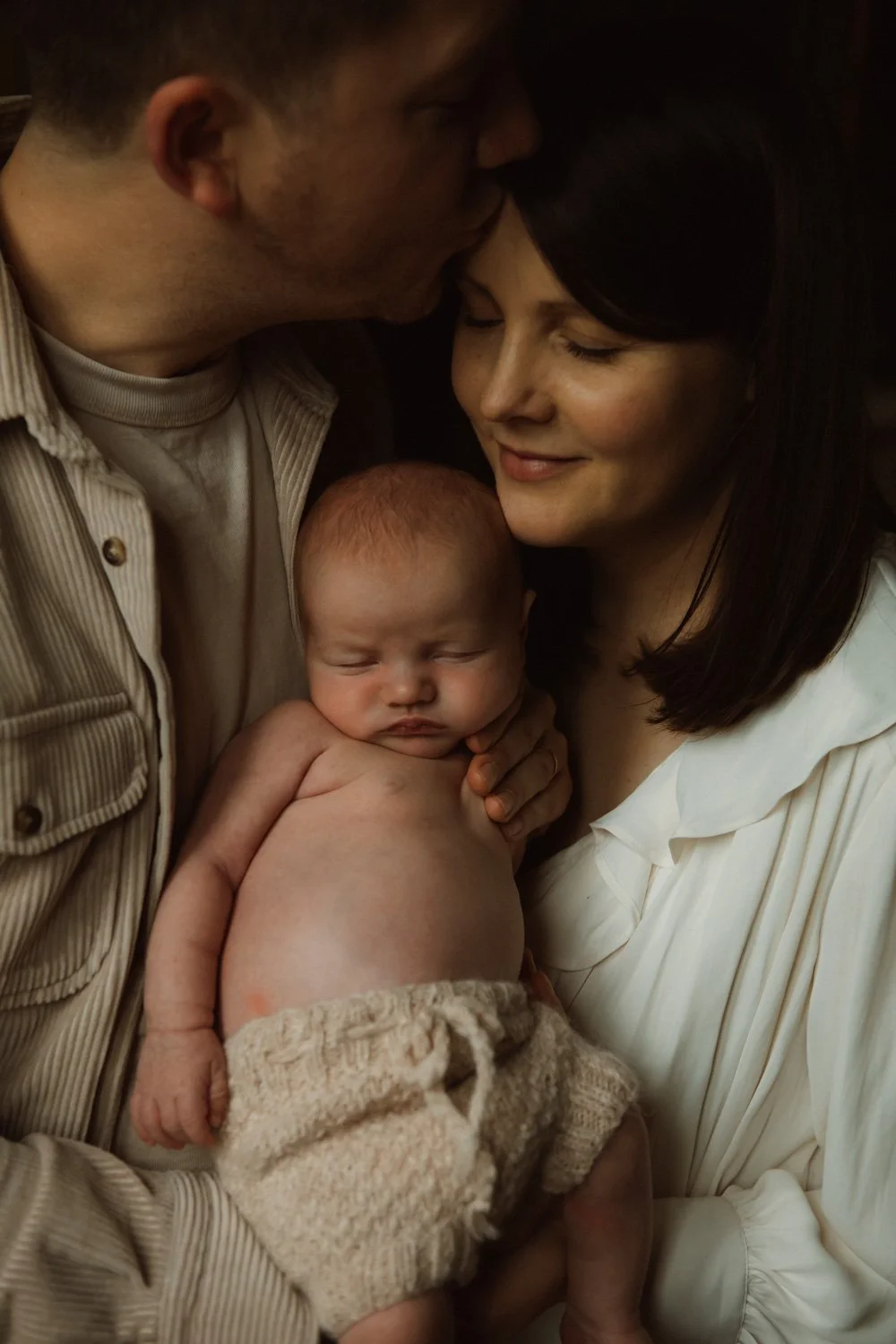
Newborn photography isn’t really about how your baby looked in a specific week.
It’s about remembering how it felt to be at the very beginning of something.
And that feeling doesn’t disappear after fourteen days.
If you’re in this stage, or about to be, I hope this gave you a clearer sense of what to expect and what’s possible. Those early days can feel like a lot, and you don’t need everything to be perfect to have something meaningful to hold onto from it.
If this feels like the kind of experience you’re looking for, you can find more about my newborn sessions here.